
NRCan, through the Geological Survey of Canada (GSC), partnered with the National Geological Survey of Mongolia (NGSM) to advance the development of a national airborne geophysical surveying program. This initiative was designed to strengthen Mongolia’s public geoscience capacity and promote responsible resource development.
Partnerships strengthen Mongolia’s airborne geophysics
Training, mentoring and field work activities were conducted in both Mongolia and Canada to advance knowledge sharing in airborne geophysical project management and human resources capacity building.
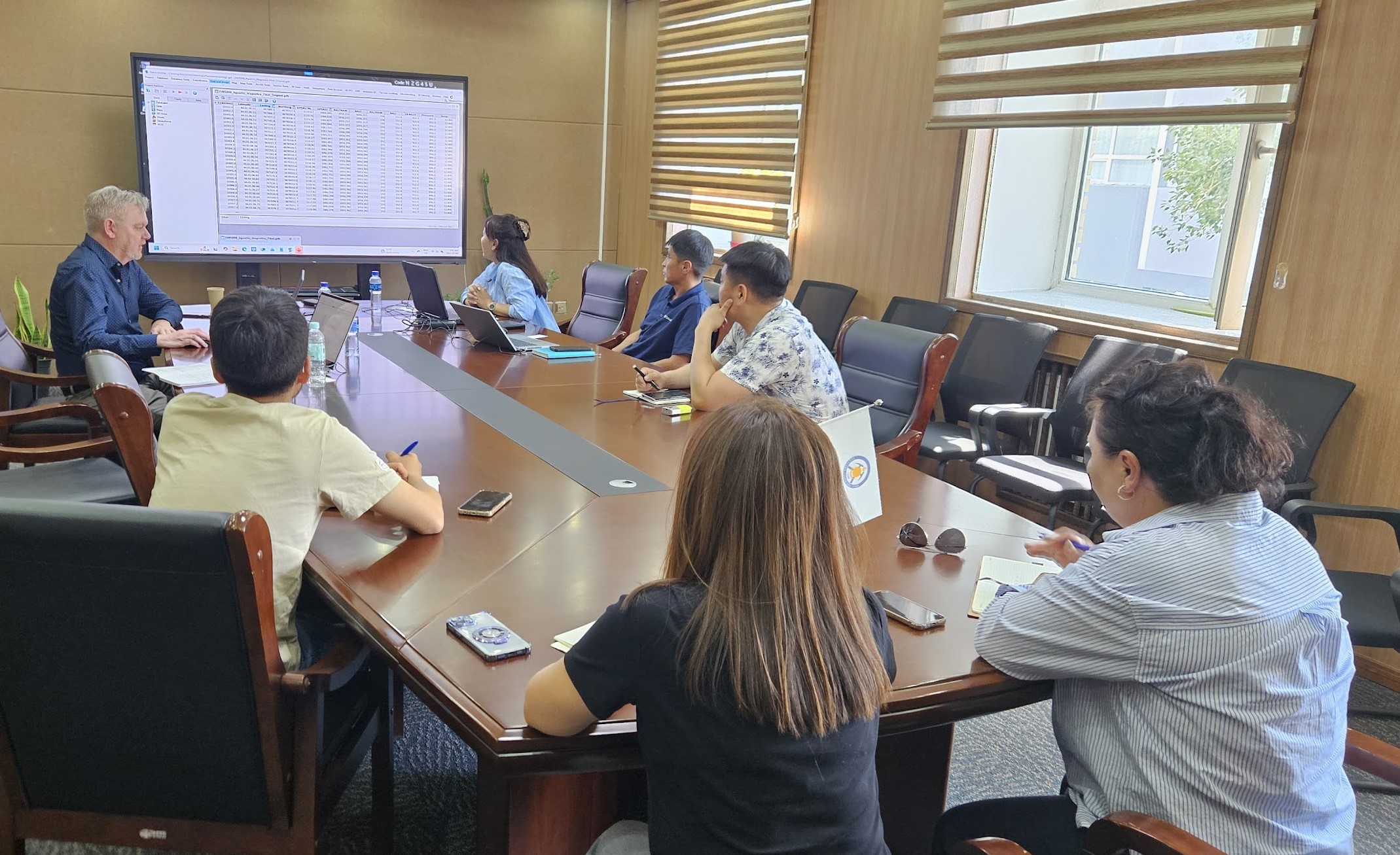
NRCan geophysicist delivers a data processing workshop to specialists from the National Geological Survey of Mongolia
Over the course of a year, NRCan experts undertook two missions to Mongolia. During these visits, they provided training sessions, delivered university lectures, and conducted field visits to important geological sites. They also engaged in strategic discussions with government agencies, academic institutions, and private sector representatives, to strengthen collaboration and advance shared goals.
Extensive stakeholder engagement with government, academic and sectoral partners took place at British Columbia’s Association of Mineral Exploration’s AME Roundup in 2025 and 2026 (Vancouver) and the 2026 PDAC Convention (Toronto). During these events, the NRCan-TAP initiative was featured as a flagship example of Canada–Mongolia cooperation in pre-exploration geoscience.
These activities directly supported Mongolia’s national objectives for strengthening geoscience capacity and Canada’s priorities related to critical minerals, responsible resource development, and international technical cooperation.
Looking ahead
Ongoing engagement will focus on building NGSM expertise in airborne geophysics, data management, and quality assurance/quality control (QA/QC) for newly acquired airborne geophysical datasets. This work will address needs identified by NGS at the outset of the project, while also strengthening bilateral relations between Canada and Mongolia. It will enhance Canada’s visibility in Mongolia’s natural resource sector and support long-term cooperation between the two countries. Additionally, these efforts will reinforce Canada’s reputation as a global leader in public geoscience and responsible resource development.