
Project location: CanmetENERGY Ottawa, Ottawa, ON
Timeline: 5 years (2023-2028)
Program: Funded by the Program of Energy R&D
Project Overview and Objectives
Living laboratory to demonstrate low-carbon prefabricated retrofit panels and assess the impact of measures to improve thermal resilience.
The Low Caron Climate Resilient (LCCR) Living Lab consists of an office trailer that has undergone a Prefabricated Exterior Energy Retrofit (PEER) style retrofit using prototype, carbon-storing PEER panels.
The panel designs included low carbon materials such as straw, cellulose, hemp, and wood fiber. Construction involved panelized retrofit of the walls and roof, new windows, and a new, low global warming potential (GWP) heat-pump system. Two different companies (Tooketree Passive Homes in Muskoka, ON and Savick in Edmonton, AB) fabricated the retrofit panels.
The building includes extensive instrumentation to measure the indoor environmental quality (IEQ) while researchers use the space. The LCCR will investigate research questions related to the use of low carbon materials in prefabricated construction, the climate resilience of high-performance buildings and impacts of deep retrofits on occupant comfort. Now that the renovation is complete, data is being collected to assess the hygrothermal performance of the enclosure and the impact of these retrofits on climate resilience and occupant comfort.
LCCR Capabilities
The LCCR is capable of collecting data on the retrofit panels, including temperature and moisture content, to aid model validation and to confirm the performance of the panels. The LCCR is also instrumented to determine occupant comfort and climate resilience. This includes sensors to measure occupancy, indoor air quality, temperature, moisture, solar radiation, weather, energy use, etc. These measurements can be used to validate energy models, and to determine the impact of future changes to the envelope that may impact occupant comfort and climate resilience.
The window sashes in the LCCR are exchangeable, and so different glazing packages will be tested to determine their impact on the structure. To understand the LCCR’s resilience to power failures, the power to the building will be cut off in summer and winter to determine the amount of time it takes the building to reach unsafe conditions.
Project Activities
| Activity | Description | Status, Outputs and Findings |
|---|---|---|
| Panel Designs |
Novel assembly concepts were developed, including:
|
Status: Completed. Carbon-storing Prefabricated Retrofit Panel Designs |
| Pilot Retrofit Project | The LCCR pilot retrofit was completed in March 2024, using the developed panel designs. |
Status: Completed Report expected FY 2024/25 |
| Monitoring and modeling | In-situ performance data is currently being collected to improve understanding of construction impacts, hygrothermal performance, climate resilience, and occupant comfort. |
Status: Ongoing Preliminary results expected FY 2025/26 |
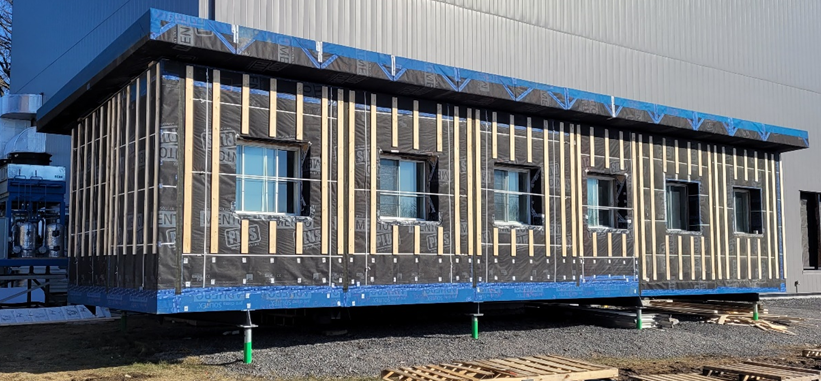
Figure 1: LCCR during retrofit construction
Partners and Acknowledgements
Canmet is collaborating with Tooketree Passive Homes, Savick, Cold Climate Building, Interfor, 475 High Performance Building Supply, and Carleton University’s Centre for Advanced Building Envelope Research on this project.
Funding for the LCCR was provided by the Office of Energy Research and Development (OERD) under its PERD program and by CanmetENERGY Ottawa. The researchers acknowledge and appreciate the support.
LCCR Capabilities
The LCCR is capable of collecting data on the retrofit panels, including temperature and moisture content, to aid model validation and to confirm the performance of the panels. The LCCR is also instrumented to determine occupant comfort and climate resilience. This includes sensors to measure occupancy, indoor air quality, temperature, moisture, solar radiation, weather, energy use, etc. These measurements can be used to validate energy models, and to determine the impact of future changes to the envelope that may impact occupant comfort and climate resilience.
Contacts
For further information, contact Hamish Pope, Housing & Buildings R&D, Buildings and Renewables Group, CanmetENERGY: Hamish.Pope@NRCan-RNCan.gc.ca